A century ago, Carl Jung identified introversion and extraversion as the two main components of his psychological theory. kinds.
In modern times, we often use the words “introvert” and “extrovert” as a way to express people’s preferences for being alone or time spent in a group. While Jung prefers the term “extrovert,” his distinction was much more than how much a person liked parties or socializing with others.
Jung originally posed a fascinating idea in the context of the current generational artificial intelligence systems: If people are different in their way of navigating the worlds of their own and external do we need to make use of artificial intelligence differently?
In his 1921 publication Psychological Types, Jung described introversion and extraversion as two separate kinds of distinct ways the focus of our lives is either the internal realm of the self as well as external events and objects.
The research on modern personality is not a perfect replica of Jung’s traits. Contemporary psychology as well as AI research usually examines extraversion as one of the five major character traits of the human being: openness, sensibility, acceptance as well as neuroticism. The tests Jung made of his initial theory more difficult as they may initially appear.
People who are introverted, may gain from using Artificial Intelligence to bridge between reflection on their own and external expression. An introvert could have thoughts in their head however they may be unable to convey them to other people that can result in frustrated when trying to explain the meaning behind something. Generative AI helps introverts this benefit in the area of reflection and expression outside.
People who have this type of personality to transition from inner feelings into external expression.
AI provides AI offers humans the parts, contradictory ideas, or even partial ideas from AI models, and then asks the users to look at these concepts in greater depth.
The shy benefit from this technique since their thoughts are investigated in a private space through AI. It can help them feel secure by AI by asking questions, presenting an example, challenging assumptions as well as actively examining their thoughts prior to sharing them to anyone.
However, this doesn’t mean that shy people don’t require AI or those who are shy can’t speak their minds in a way that is authentic; however, human instincts and abilities are much more sophisticated.
AI is a key in the lives of shy individuals The most significant benefits is ways to communicate thoughts, feelings, and ideas that is often absent when it comes to human relations. People who are shy will first gather opinions from their people they know before accumulating every piece of information available to describe their personal feelings. who have this type of personality may have symptoms such as a sensitivity to noisy environments.
However, AI could be an enormous distraction for individuals who focus on the outside the world. One way to deal with this is to create AI to allow the space to think instead of creating ideas. For instance, “Ask me questions to help me explore my ideas instead of telling me what to think.”
Development
Technology has the ability to alter our thought patterns, or even suppress them dependent on the way and time the technology is utilized. Research has shown that we would prefer AI which is similar to us than AI that doesn’t.
An article published by the Journal of Communication Psychology showed that in 2026, AI users will be more likely to communicate with AI through artificial languages.
Testing conducted as part of the study revealed that 64% the participants picked an AI that reflected the top five characters, which was created to resemble their opposite.
However, there was a cautionary note: research team did not discover any evidence that introverted people outperform AIs who have similar traits to their personality which suggests that introverts could have trouble conversing than people in text-based conversations.
Individual equality shouldn’t be reduced to granting everyone an AI system that speaks their own language.
Compulsion Behavior
Recent research has questioned this view. An analysis that was presented during CHI 2026, an International Conference on Human-Computer Interaction and Interaction, showed that when the participants were able to discuss their personal issues through an AI system the self-esteem of participants improved, as did the traits of their personality shown by their environments.
The longer conversations resulted in more engagement with an AI system, as well as higher enjoyment from those interactions. However, seeing by itself isn’t necessarily enough data to decide whether an interaction can be beneficial.
The study, which was released in Science 2026, looked at the most advanced artificial intelligence devices that assisted hundreds of thousands of people to think and behave when they were being asked.
In the event of discussing conflicts between people using these types of systems, people feel more comfortable, yet their desire to move in order to end them is reduced.
But, they also relied more heavily on proper responses and were also more likely to utilize AI and AI, causing fears that interactions of low value might be acceptable.
The root issue of personal AI lies in that if we use personalization solely to meet the desire for convenience or precision, we run the risk of making increasingly complex mirrors of our psychological state.
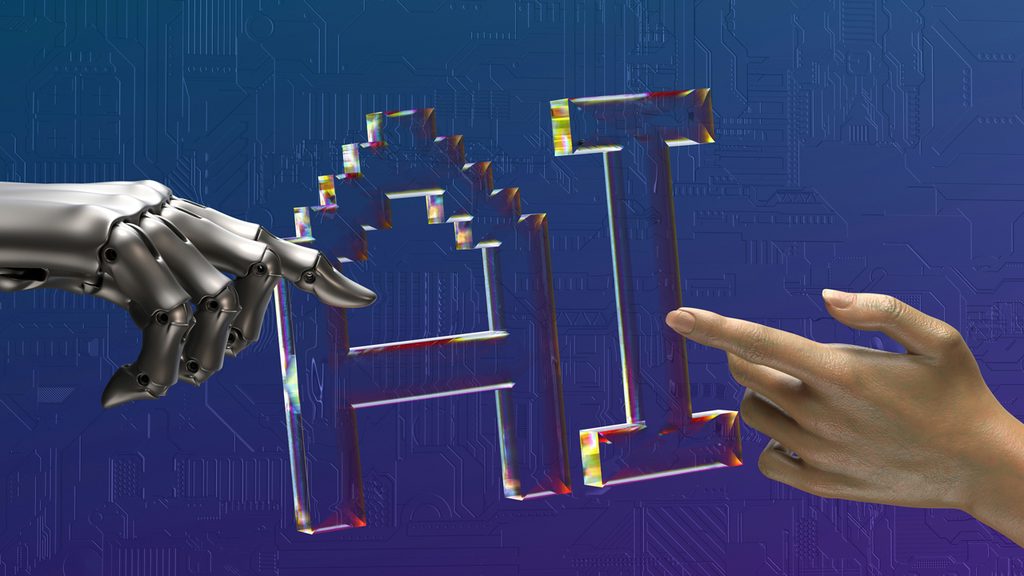
Yet, where do we stand? Are we in the right place? AI advance towards humankind, and vice versa, or could the two merge and transform into something else?
Jung wasn’t referring to a particular perspective as superior to another when he talked about a psychological factor; rather it highlighted what could take place when an focus becomes too powerful on the minds of people.
Personal AI does not simply adjust to our needs It could be a way to bridge the gap between contemplation and anticipation, while for those who are extroverts, it could offer a space to take a moment to think and reflect.
AI’s capability to adapt to the environment around us and then subliminally alter it is crucial in shaping the definition of the term “personhood”.
Maybe it’s not only about which artificial intelligence aligns best with our desires and needs, but what our interactions could determine who we are as we grow older.